The Trap Hook: Name the Two Bad Options Your Viewer Is Stuck Between
Also called: Catch-22 opener, Lose-lose dilemma, Rock and a hard place, False dichotomy hook
Picture a small skincare brand reading its reviews on a Sunday night. One line keeps coming up: 'The cheap stuff did nothing, and I wasn't paying [price] for the fancy jar.' That buyer isn't confused about the product. They're stuck between two choices they don't like, and nobody has said it out loud for them.
The trap hook says it for them in the first line of your video. This guide shows you how to write it, film it for Reels, TikTok, LinkedIn and video ads, and use it honestly, without inventing a problem your viewer doesn't have.
What is a the trap hook?
A trap hook is a social media opening that names two options your viewer dislikes and feels stuck between. You state both sides in the first seconds, then present your product, method or idea as the third option.
You open by naming a real choice your viewer already faces. Option A is cheap, easy or familiar, but it lets them down. Option B works better, but it costs more money, time or effort than they can justify. Neither feels right. You say that tension out loud, in plain words, before you show anything else. Then you introduce a third path. Here's a quick example: 'Cooking every night wears you out, but ordering in every night empties your account.' Anyone who has stood in front of the fridge at 7pm feels that one. The hook doesn't sell the third path yet. It earns attention by describing the stuck feeling accurately. If the viewer nods at both sides, they'll stay to hear what sits between them.
The trap hook, in pictures
Why it works
- Recognition
- Naming two drawbacks that viewers already recognise can make the opening feel relevant and understood. This depends on the dilemma being real for that audience; it does not guarantee attention or trust.
- Interest in an alternative
- When neither familiar option feels suitable, viewers may be interested in another approach. Introduce it promptly and explain which trade-off it addresses, including any important limits.
- Audience relevance
- A specific dilemma can help viewers decide whether the content applies to them. Whether this improves viewing or action needs testing; the framing alone does not establish audience quality or buying intent.
The formula
- Pick one real decision your viewer makes, like what to buy, how to train or how to study.
- Name the low end (option A) and its one honest flaw, in the viewer's own words.
- Name the high end (option B) and its one barrier: price, time, effort or access.
- Join the two with 'but' so the viewer hears the squeeze in a single breath.
- Point to the third option and promise one specific thing it does better.
If [option A] [one honest flaw], but [option B] [one barrier], [here's the middle / try this / this is for you]. [Your option] gives you [one benefit] without [the flaw or the barrier].How to use it
- Find the real dilemma first
Read comments, reviews and support messages. Look for phrases like 'I tried the cheap one' and 'I can't justify that price.' Write down the two options people actually mention. Use their words, not your category labels.
- Test both sides
Check that both sides hurt, in different ways. One may waste money and the other may waste time. One may feel too basic and the other too much. If only one side is a real problem, use a different hook.
- Write one tight opening line
Use this shape: 'If A does this, but B costs that, this is for you.' Keep each side short and name one flaw per side. Don't list features yet. The viewer should grasp the trap before you explain the fix.
- Match the visual to the words
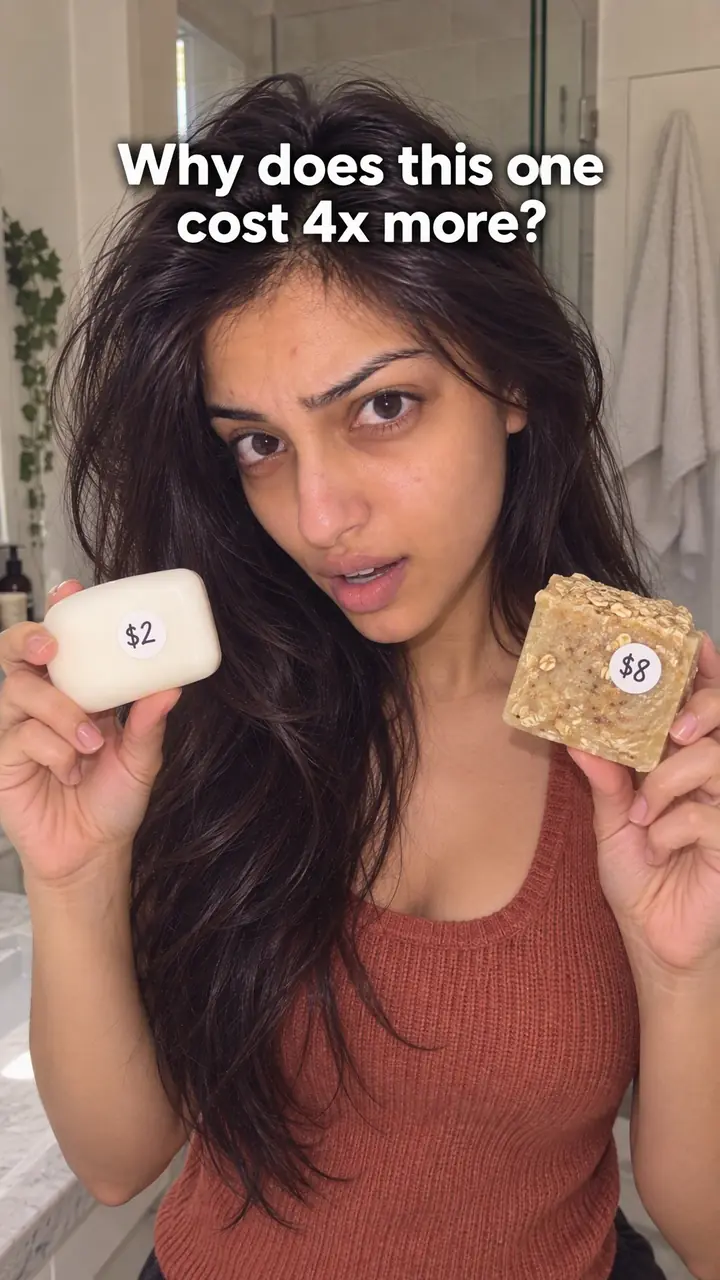
Show someone caught between the two options. Put option A in one hand and option B in the other, or place both on a table. Add big on-screen text with the same dilemma, and say the line out loud at the same time. The viewer should see, read and hear the trap together. On LinkedIn, put the trap in the first line of the post so it shows before 'see more'.
- Reveal the third option fast
Bring in your product or idea right after the opening line. Place it between the two options, or push both aside. State one clear benefit, then prove it on camera: show the texture, the fit, the time saved or the result.
- Close with a simple action
End with one next step. Ask viewers to comment with the option they use now, or send them to the demo, the guide or the product page. In ads, keep the call to action tied to the dilemma you opened with.
Examples
| Niche | Line | Why it works |
|---|---|---|
| Beauty (DTC) | Your [budget serum] does nothing, and the [price] one feels like a gamble. Here's what sits in between. | It names a results problem on one side and a risk barrier on the other. 'Gamble' fits how hesitant buyers actually feel. |
| Fashion (DTC) | Tees that twist after [number] washes, or tees that cost [price] each. Neither is a wardrobe. | It drops the 'if' and states both sides as a list. That works well as bold on-screen text. |
| Food (DTC) | If you're tired of cooking every night but sick of paying for delivery, this takes [number] minutes. | It swaps price for time and effort, so the trap fits a daily habit, not a one-off purchase. |
| Home (DTC) | If cheap sheets pill by [month] and hotel-grade ones cost [price], feel this before you pick either. | It gives each side one concrete flaw, then invites a texture demo as the proof. |
| Accessories (DTC) | Your tote is falling apart, but a [price] leather bag feels silly for the commute. There's a middle. | It ties the high end to a real situation, so the barrier is about fit, not just money. |
| Fitness gear (DTC) | Resistance bands snap, and a full rack won't fit your flat. This is what I train with instead. | It names a reliability flaw and a space barrier, which suits people training at home. |
| Creator: content tips | Posting every day burns you out. Posting once a month makes you invisible. Try a [number]-post week. | There's no product here. The third option is a method, so the hook builds trust before any offer. |
| Creator: personal finance | Your savings account barely moves, but picking stocks yourself feels like guessing. Let's talk about the middle. | It names two money fears plainly and promises a calm explainer, not a pitch. |
| Creator: language learning | Apps feel like a game you never finish, but a tutor costs [price] an hour. Here's my [number]-step routine. | It names a progress problem and a price barrier, then offers a routine anyone can copy. |
| LinkedIn: B2B service | Freelancers vanish mid-project. Agencies want [price] a month. We built something for teams in between. | It suits a professional feed. The trap is about trust on one side and budget on the other. |
Variations
- The price trap
- The classic form. Cheap disappoints, premium is out of reach. Use it for mid-priced products and say the price barrier in one phrase.
- The time trap
- Both options cost hours instead of money, like doing it by hand versus a long setup. The third option is the faster route, so show a clock or a timer on screen.
- The too-much, too-little trap
- One option does too little, the other does far more than the viewer needs. It works well for apps, tools and kits, where the middle is a simpler setup.
- The pressure trap
- Use two social pressures instead of two products, like over-sharing versus disappearing, or strict diets versus no plan at all. It suits creators who teach a habit or a mindset.
Common mistakes
- You invent a dilemma nobody feels.
- Fix → Pick the two options your viewer names most often. Use comments and reviews to find them.
- You describe option A in vague terms.
- Fix → Say what goes wrong in daily use. Name the rash, the torn seam, the wasted hour or the repeat cost.
- You attack the expensive option for too long.
- Fix → Name the barrier in one phrase, such as the price, the wait or the effort. Then move on.
- You wait too long to show your solution.
- Fix → Introduce the third option in the next line. Show it on screen and state one benefit straight away.
- You stack two traps in one opening.
- Fix → Use one dilemma per video. Save the second dilemma for another post.
- You promise the third option fixes everything.
- Fix → State the limit plainly. Say who it suits and what it won't do. Clear limits build trust.
When not to use it
- Skip it when you cannot establish that the audience dislikes both options, or when one option already suits them. Use Problem recognition (problem-recognition-hook) to describe a real symptom without manufacturing a dilemma.
- Skip it when your offer does not meaningfully address the named trade-off or its claimed advantage lacks support. Use Honest limitation (honest-limitation-hook) to explain who it suits and what it cannot do; do not substitute a test for missing evidence.
- Skip it when viewers mainly need to judge genuine differences between workable options rather than escape two disliked choices. Use Comparison (comparison-hook) to present relevant features and limitations fairly, regardless of where your product sits on price.
- Skip it when a straightforward explanation would serve the viewer better than a dilemma. Use How-to promise (how-to-promise-hook) for a clear, supportable method, without promising guaranteed results or treating urgent or sensitive problems as a sales setup.
For brands
For DTC brands, the trap hook fits products priced between a disappointing low end and an admired but delayed high end, or new categories that solve a gap buyers already feel. Name that gap fairly. Don't mock cheaper products or rubbish premium ones, because many of your buyers own both. Your job is to show why your product exists.
- Mine your reviews and returns for the two options buyers mention most. Script three trap lines from their exact wording and test them as separate ad openings, changing nothing else.
- Film the 'caught between' shot: a hand holding the budget version, another holding the premium version, then your product placed in the middle. Reuse it as the first frame across Reels, TikTok and paid ads.
- Follow the trap with one proof moment that matches the flaw you named: a wash test for clothing, a texture swatch for skincare, a timer for food, a close-up of the weak point for home goods.
- Put your price on screen early when price is the barrier. Hiding it after a price trap breaks the promise of the hook.
- Give creators and UGC partners the template, not a script. Let them fill in the two options in their own words so the dilemma sounds lived, not written by a brand.
Pairs well with
- Problem recognition
Open by naming the symptom the viewer keeps seeing, then use the trap to lay out the two fixes they've already tried and disliked.
- Direct callout
Name the exact viewer first, such as renters or new runners, then state their dilemma. The trap lands harder when people know it's about them.
- Comparison
After the spoken trap, put option A, option B and your option side by side so the viewer can judge the middle for themselves.
- Objection handling
Once you present the third option, viewers will ask 'is the middle really good enough?' Ask that doubt out loud in the next beat and answer it.
FAQs
- What does hook mean in social media?
- A hook is the first line, frame or sound of a post. Its job is to give a specific viewer a reason to keep watching. It works when it names a problem, a result or a tension they recognise at once.
- How does the trap hook work?
- It names two bad options and the stuck feeling between them. For example: 'If [cheap option] keeps failing, but [premium option] costs more than you can justify, watch this.' You then show a third option that avoids both problems.
- What is a good hook sentence starter for the trap?
- Try 'If [A] isn't working, but [B] is out of reach…', '[A] does this. [B] costs that.' or 'Stuck between [A] and [B]?' Each one sets up two sides in a single breath and leaves room for your third option.
- How do you write a TikTok hook using the trap?
- Start with the viewer, not your product. Name the two options they already know and the flaw in each one. Keep the line to two short clauses. Then pause, show the third option and prove it with a demo or a clear reason.
- What are some good trap hook examples?
- Good examples state both sides in one breath. Try: 'If [free tool] takes all day, but [paid tool] is out of budget, try this middle step.' Or: 'If [option A] is too harsh and [option B] does nothing, you need a different approach.' Replace the brackets with your viewer's real choices.
- What are some strong hooks for TikTok?
- Strong TikTok hooks speak to one person, name a concrete problem and land in the first line. The trap is useful because it filters fast. Viewers who feel stuck stay, and viewers who don't move on, so the people who keep watching are the ones with the problem.
Key takeaways
- Name two real options, and give each one a clear, honest flaw.
- Keep the opening to one line the viewer could repeat back to you.
- Show the dilemma on screen while you say it.
- Present your option as the third path, then prove it fast.
- Skip this hook if the dilemma isn't real for your viewer.