Transformation Story Hook: Definition, Formula and Examples
Also called: Rags to riches, Hero's journey, How it started vs how it's going, Origin story
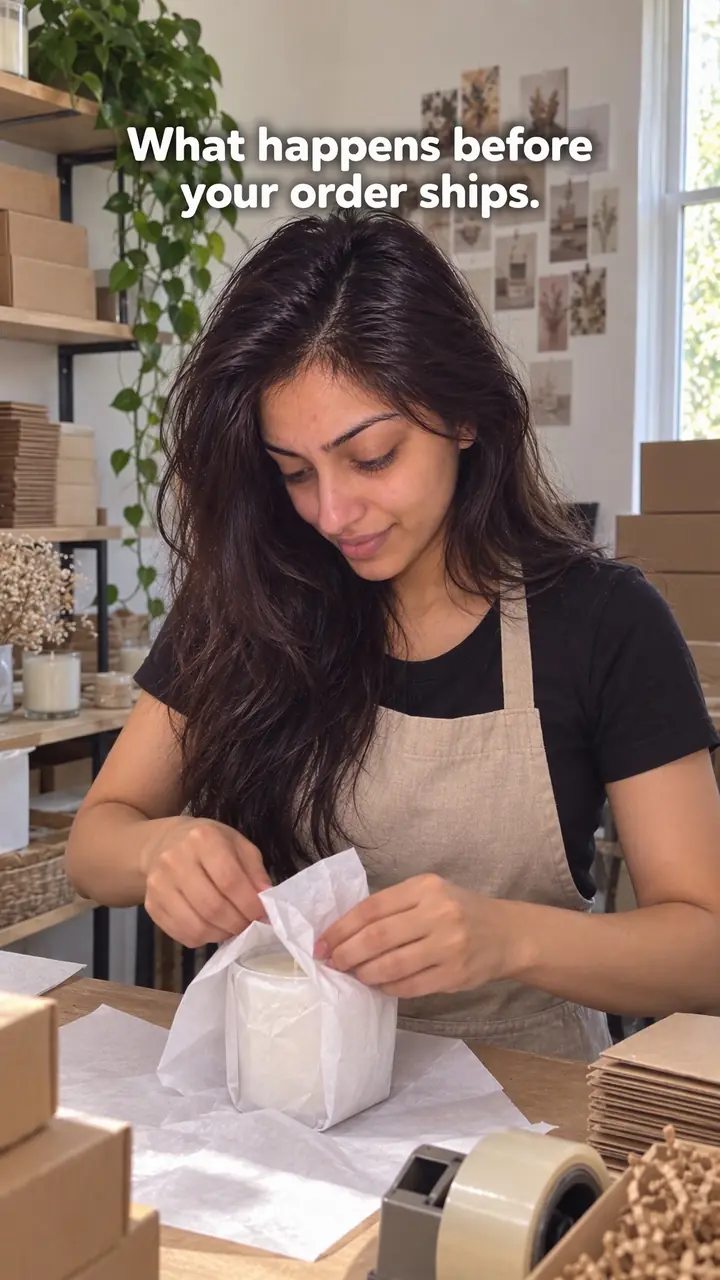
A candle maker finds an old photo on her phone. It shows six jars cooling on a spare-room desk, next to a laptop and a cold cup of tea. Today she packs orders at a bench in a small unit. She posts the old photo first, with one line on screen: 'From six jars on a desk to [number] orders.' Then she cuts to the bench. That is the whole hook. It works because the start is real, the result is real, and you can see both.
This guide shows you how to write that line for your own brand or channel. You get a formula to copy, examples across niches, variations, the mistakes that make viewers doubt you, and when to pick a different hook.
What is a transformation story hook?
A transformation story hook is an opening line that sums up a brand's or creator's journey in one contrast: from a small, specific start to a real milestone reached now. For example: 'From a kitchen experiment to [number] orders.'
You compress a long journey into two clear points. The first shows where you started, often with little money, space, skill or help. The second shows where you are now, with a milestone you can prove. Picture a baker who says, 'From one tray in my home oven to [number] cafés we supply.' The gap between those two points is the story. Viewers stay to learn what changed, what you did and what nearly stopped you. You tell that middle part in the rest of the video or post.
Transformation story hook, in pictures
Why it works
- A modest start can make the journey relatable
- A specific starting point can help viewers understand the scale of the change. Some may connect with an underdog story, but that response depends on the audience and how relevant the journey feels.
- A verified milestone can make progress concrete
- A real milestone gives viewers something specific to assess. Orders can show purchases, while team size shows a different kind of growth. Neither alone proves product quality, satisfaction or repeat buying.
- The contrast can invite curiosity
- Showing the start and the present can make viewers curious about what happened between them. A relevant decision or change can help explain the journey, though the contrast does not guarantee continued attention.
The formula
- Choose a starting point you can show in one shot: a room, a stall, a desk, a first batch or a first tool.
- Choose one milestone you have actually reached and can prove: orders, stockists, team size, students or years in business.
- Join the two with 'From... to...' and keep the line short enough to read in two seconds.
- Open on the 'then' photo with the line on screen, and say it out loud at the same time.
- Cut to the 'now', then tell one honest moment from the middle before your call to action.
From [specific start you can show] to [real milestone you can prove].How to use it
- Start with the 'then' photo
Pick a start you can picture in one second. A kitchen table, a spare room or one market stall works well. Avoid broad starts like 'nothing' or 'a dream' unless you can show them.
- Put the line on the first frame
Show the old photo or clip first. Put the line in large text on that frame and say the same line out loud. The viewer should see, read and hear one point at once. On LinkedIn, make the line your first sentence and attach the photo.
- Use a number you can prove
Use a milestone you have actually reached. Orders shipped, stores stocked or people hired are clear. If you are early, use a smaller truth, such as your first repeat customer.
- Tell one middle moment
Do not jump straight to praise or a pitch. Name one problem you hit, one change you made and what that change led to. Keep each part short.
- Show the 'now' clearly
Show the order screen with private details hidden, the current workspace or the team at work. Proof turns a nice line into a reason to trust you.
- End with one next step
Ask viewers to share their own start, follow for the next milestone or look at the product the story led to. Pick one action, not three.
Examples
| Niche | Line | Why it works |
|---|---|---|
| Food and drink DTC | From a kitchen experiment to [number] orders. | A home kitchen is easy to picture, and an order count is plain proof that people buy. |
| Beauty DTC | From testing balm in jam jars to [number] stockists. | The jam jars make the start feel small and homemade, so the stockist count reads as earned. |
| Fashion DTC | From one secondhand sewing machine to a range of [number] pieces. | A single tool at the start makes the full range easy to follow on screen. |
| Home goods DTC | From one market stall to [number] stores. | It moves from one physical spot to wider reach, so the growth feels concrete. |
| Accessories DTC | From packing bags on my bedroom floor to a unit with its own packing bench. | Two simple shots prove it. No number is needed when the space itself has changed. |
| Fitness DTC | From [number] resistance bands in my car boot to shipping every weekday. | The result is a working routine, not a boast, and viewers can see the daily change. |
| Founder-led brand | From a side project to a full-time team of [number]. | It shows the work became real enough to support other people, without naming revenue. |
| Fitness coach | From training [number] people in a park to coaching [number] clients online. | Both ends serve people, so the shift reads as wider reach, not just more income. |
| Freelance video creator | From editing on a borrowed laptop to [number] regular clients. | It marks the point a skill became paid, repeat work, which other freelancers want to understand. |
| Illustrator | From doodling on lunch breaks to my first sold-out print run of [number]. | The modest start invites other hobbyists in, and a print run is easy to show. |
Variations
- The time version
- Lead with time instead of scale. Try: '[Number] months ago I packed orders on the floor. Today I pack them here.' This suits anniversaries and LinkedIn posts where the date is the news.
- The product version
- Tell the product's journey, not the company's. Show version one next to today's version and name one fix customers asked for. It fits Reels and product launches.
- The small win version
- Keep the result small and honest. Try: 'From zero repeat buyers to my first [number] regulars.' Use it when you are early and want trust more than scale.
- The skill version
- For creators, track a skill instead of sales. Show your first attempt next to recent work: 'From my first wobbly edit to editing for [number] clients.' It builds trust with people who want to learn the same skill.
Common mistakes
- Rounding up or stretching the result
- Fix → Use the exact figure you can show. If the number is modest, keep it. Modest and true earns more trust than large and vague.
- Making the start too vague
- Fix → Name the place, tool or task. 'From my kitchen table' is clearer than 'From nothing.'
- Skipping the hard middle
- Fix → Add one setback, cost or slow period. Viewers trust a journey that includes friction.
- Showing no proof for the 'now'
- Fix → Show one piece of proof, such as a dated photo, the workspace or a redacted order record. Then move on with the story.
- Choosing a milestone viewers do not care about
- Fix → Pick the milestone your audience values. For buyers, repeat orders or product quality may matter more than team size.
When not to use it
- If you have not reached a genuine milestone, use Journey to document what you are building now rather than imply growth that has not happened.
- If you cannot substantiate the milestone, use Behind the scenes to show the work you can truthfully document. Supporting records do not all need to be public, but the claim still needs a sound basis.
- If the point is a product's visual before-and-after rather than the brand's journey, use Transformation for a change shown in one shot, or Comparison for two versions shown side by side.
- If customers need an update about an unresolved delay or fault, a celebratory growth story may be poorly timed. Use Objection handling to address the concern accurately, or Customer complaint when you can show a real complaint and what you actually did about it.
For brands
For DTC brands, this hook is proof, not bragging. It tells a new visitor that real people bought, came back and bought again. Keep the claim modest and checkable, and let the product and the work carry the post.
- Open a Reel or TikTok on your earliest packing photo, then cut to today's packing bench. Say the line once, then show one real order being packed.
- Use it on LinkedIn for a hiring, stockist or new premises milestone. State the start and the result, then share one decision that got you there.
- Tell the product's story for a relaunch. Put the first rough version next to the current one and name the change customers asked for.
- Mark your brand anniversary with three photos only: the start, one hard middle moment and where you are now.
- Pin the video to your profile so new visitors see where you came from before they look at the shop.
Pairs well with
- Journey
Post journey content while you build, then use the transformation story hook once you can look back on a result. The old journey clips become your 'then' footage.
- Founder confession
Open with the transformation line, then admit one real mistake from the middle. The result earns attention and the confession earns trust.
- Behind the scenes
Follow up with a behind-the-scenes video of how you work now, so viewers see the 'now' up close.
- Customer story
Add a real customer's message to the 'now' section. It shows the milestone from the buyer's side, not only yours.
FAQs
- What is a good hook for a story?
- Use a clear contrast the viewer can picture at once. Name the humble start and the current result, for example: 'From packing orders on my floor to packing them in a small unit.' Then show proof and explain one key step.
- What is a good hook sentence?
- Keep it short, specific and true. Use this shape: 'From [starting point] to [current milestone].' Avoid vague words like success or growth. A place, task or real number makes the line easier to trust and remember.
- What is a catchy hook?
- A catchy hook gives the viewer a reason to pause. It opens a gap they want to close. With this hook the gap is simple: you started there, you are here now, and they want to know how you got from one to the other.
- Can you give me an example of a hook?
- Yes. Try: 'From one market stall to [number] stores.' Or: 'From making this at my kitchen table to shipping [number] orders.' Replace the brackets with your real figures. Treat these lines as templates, not as claims.
- What is a good narrative hook?
- A good narrative hook starts a story without telling all of it. This hook gives the beginning and the end in one line and leaves out the middle. That missing middle is what you reveal next.
- What is an example of a strong hook?
- A strong example is: 'From a side project after work to a full-time team of [number].' The start feels modest, the end feels earned, and both parts are concrete enough to picture or check.
Key takeaways
- Use one true start and one true result, and make both easy to picture.
- Open on the 'then' photo, with the line on screen and in your voice.
- Tell one honest middle moment. That is where trust is built.
- If the milestone is small, say so. A small true claim beats a large vague one.
- Not there yet? Use the journey hook now and save this one for later.