Durability Test Hook: Bend, Stretch or Wash It on Camera
Also called: Torture test, Stress test, Abuse test, Will it survive
Picture a small leggings shop. Every ad gets the same comment: 'Do these sag after a few wears?' The founder could answer in text. Instead, she films her hands pulling the waistband as wide as it goes. On screen it says 'Will it snap back?' Then she lets go. That opening is a durability test hook, and it answers the doubt before anyone has to type it.
This guide shows you how to plan that kind of opening, film it cleanly and keep your claims inside what the footage proves. You get a copy-and-adapt formula, filming steps, swipe examples for brands and creators, variations, common mistakes and a section for DTC product brands.
What is a durability test hook?
A durability test hook is a video opening that puts a product under visible stress, such as bending, stretching or washing, so viewers stay to see whether it holds up.
You open mid-test, not before it. Hands are already bending, stretching or washing the product, and one short question sits on screen, such as 'Will it hold?' You keep filming until the viewer gets the answer. For example, you stretch a pair of leggings as far as they go, let go, then show the waistband lying flat. The rest of the video shows the result close up, says what the test proves and names its limit. A stretch test shows recovery. It does not prove a seam will last for years. Say what you tested and claim nothing more.
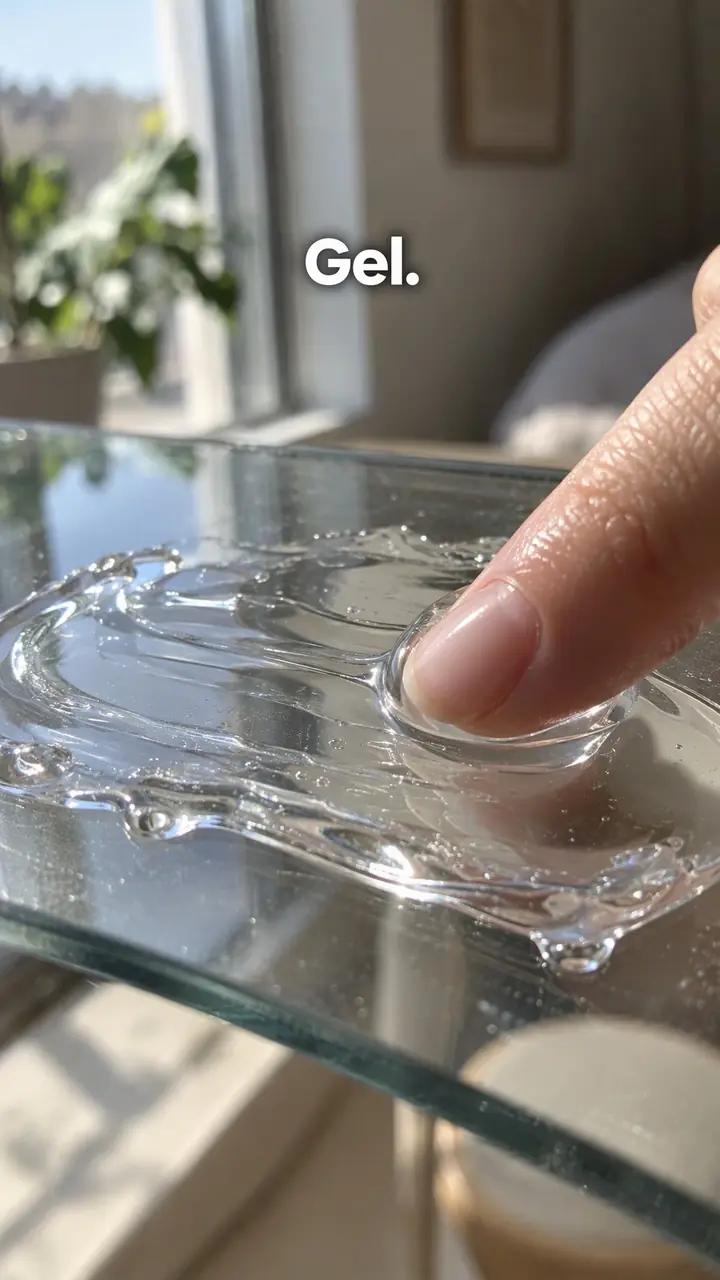
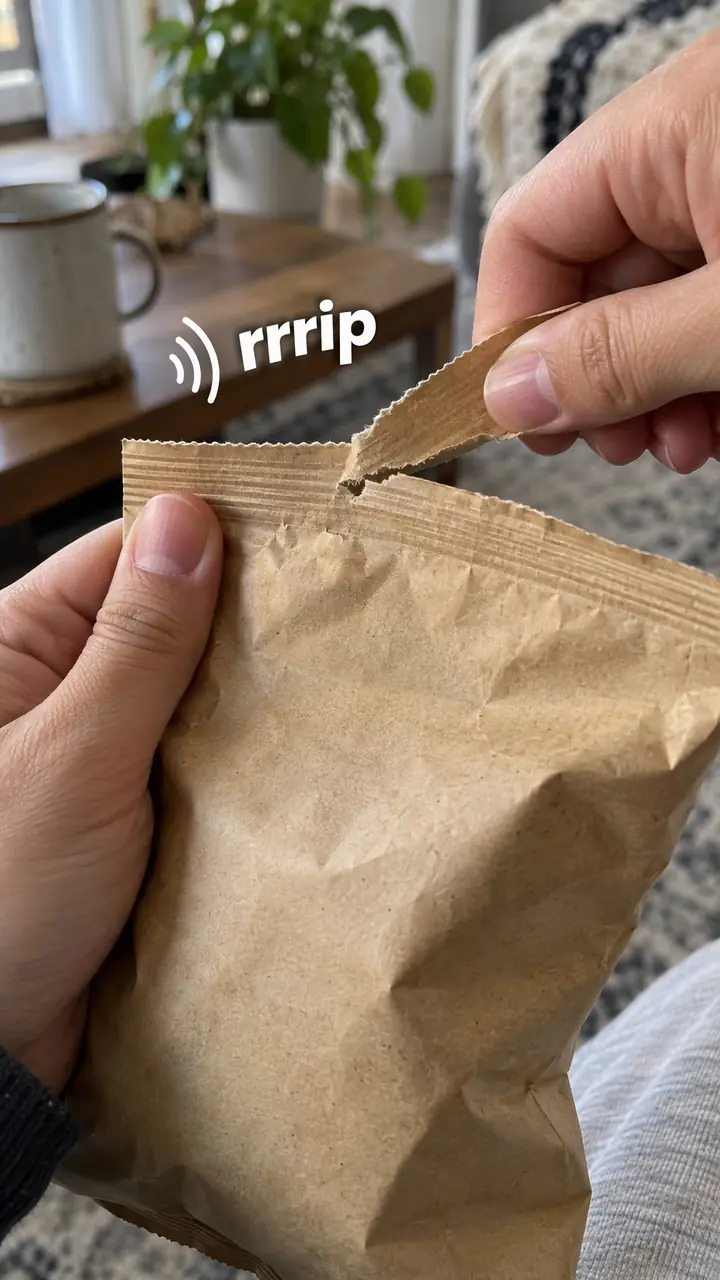
Durability test hook, in pictures
Why it works
- Visible evidence can make a claim easier to assess
- A clear stress test can give viewers something concrete to judge instead of relying only on a promise. Its value depends on relevant conditions, an observable result, and claims limited to what the test supports.
- An unresolved outcome can invite attention
- Seeing a product under stress may make viewers curious about whether it will hold up. Show the outcome promptly; delaying it does not guarantee that people will keep watching.
- Detail can make the test easier to follow
- Close views and genuine test sounds can help viewers understand the action and inspect visible changes. They do not establish typical performance or long-term durability on their own.
The formula
- Open on the stress already happening. No greeting, no logo, no setup shot.
- Put one short question on screen that names the failure viewers fear.
- Hold the tension for a beat so viewers can guess the outcome.
- Release, rinse or unfold, then show the result close up from more than one side.
- Say what the test proved, name its limit, and give one next step.
[First frame: product] under [bend / stretch / wash / load], already in motion. On-screen text: 'Will it [snap back / hold / stay the same colour] after [number or action]?' Hold for [seconds]. Reveal the result close up. Voice or caption: 'That shows [one benefit]. It doesn't test [honest limit]. [Next step].'How to use it
- Choose one doubt to answer
Pick the failure buyers worry about most. Think sagging waistbands, cracked frames, peeling coating, loose zips, faded colour or straps that slip. One worry per video keeps the test clear.
- Set a fair, repeatable test
Use force, time, weight or wash cycles you can repeat. Write the setup down before you film. Avoid tests the product only passes sometimes. If it fails on camera, do not hide that result.
- Film the opening frame first
Place the product close to the lens with the stress already under way. Add short text such as 'Will it hold?' Keep hands, product and strain visible in the first frame. This works for Reels, TikTok and video ads alike.
- Capture the strain sound
Record the pull, creak, scrub or splash. Add a calm voice line once the action has started. Do not bury the key sound under music, and add captions for sound-off viewers.
- Show the result without a cutaway
Release, open, unfold or lift the product. Move in close. Show both sides, edges, seams and surface. Hold the shot long enough for viewers to judge for themselves.
- Explain the result and its limit
Say what the viewer just saw in plain terms, then name the limit. A wash test shows colour and shape after those washes. It does not prove lifetime wear.
- Close with a useful next step
End with one action tied to the test. Ask which test to run next, invite a care question or point to the product page for material details.
Examples
| Niche | Line | Why it works |
|---|---|---|
| Activewear (DTC fashion) | Hands pull the waistband wide and hold it. Text: 'Will it snap back flat?' Then let go. | Recovery is the exact doubt behind sagging, and the release gives an instant answer. |
| Basics and T-shirts (DTC fashion) | Wash tee number [number] next to a brand-new one. Text: 'Can you tell which is which?' | The viewer becomes the judge, which makes fading and shrinkage easy to check. |
| Sunglasses (DTC accessories) | Thumbs bend the frame at the bridge, slowly. Text: 'Flex or snap?' | The risk is obvious in the first second, and the sound of the frame adds tension. |
| Cookware (DTC home) | A [tool] scrubs the pan for [seconds], then a wipe. Text: 'Did the coating mark?' | Before and after sit in one shot, so nothing feels edited. |
| Bags and backpacks (DTC accessories) | Fill the bag with [weight], then lift it by one strap. Text: 'Will the stitching give?' | It ties strength to a real moment: carrying a full load. |
| Resistance bands (DTC fitness) | Stretch the band to full length [number] times in a row. Text: 'Still the same length?' | Repeated stress matches how buyers actually use it, and length is easy to compare. |
| Lipstick (DTC beauty) | Swipe on, then rub the swatch with a damp cloth. Text: 'Will it smudge?' | Wear-proof is a durability doubt for beauty, and the cloth shows the answer clearly. |
| Gear review creator | 'I bought this budget phone case so you don't have to.' Bend the corner back. Text: 'Will it crack?' | An independent tester has no product to protect, so the outcome feels open. |
| Thrift and vintage creator | 'This jacket is [number] years old.' Pull the seam hard under bright light. Text: 'Is old stitching better?' | It mixes a stress test with a question the creator's audience already argues about. |
| DIY and sewing creator | Two seams, two stitch types, same pull. Text: 'Which one opens first?' | Viewers pick a side before the reveal, and they learn a technique at the same time. |
Variations
- Repeat-cycle count
- One action repeated over time, with a counter on screen: wash [number], wear [number], open [number]. Keep light and angle the same so the change, or lack of it, is the only thing that moves.
- Stretch and release
- Apply stress, hold, let go. The payoff is the return to shape, so give the final frame a full beat. Suits fabric, frames, foam and bands.
- Load test
- Load the product the way a buyer would: a full bag, a packed case, a person sitting down. Keep the weight or contents visible so the test feels fair.
- Viewer-picked test
- Ask followers to name the next stress in the comments, then film it. It keeps the series going and shows you are not choosing only easy wins.
Common mistakes
- Starting with a greeting or product beauty shot
- Fix → Cut the intro and logo. Open on the product under stress, then add context after the first action.
- Testing five things in one short video
- Fix → Pick one stress and one question. Save the second doubt for a second video.
- Cutting away before the result is clear
- Fix → Move closer, slow down and hold the result. Show seams, edges and surface from more than one side.
- Running a test the product only passes sometimes
- Fix → Repeat the test off camera first. If results vary, fix the product or choose a different proof.
- Claiming more than the footage proves
- Fix → Name the exact scope. Say 'after [number] washes' or 'after this bend,' never 'lasts forever.'
- Covering the test with loud music
- Fix → Keep the strain sound. Lower the music, mic the action and add captions.
When not to use it
- Skip it when a meaningful stress test would be unsafe, damage-sensitive, or likely to encourage unsafe copying. Use Extreme close-up (extreme-close-up-hook) to show construction details without implying that appearance proves durability.
- Skip it when the product passes inconsistently or the successful outcome would require selective reporting. Use Honest limitation (honest-limitation-hook) to explain who the product is not suited to, supported by what you actually know.
- Skip it when durability is not the buying question. Use Size demonstration (size-demonstration-hook) for dimensions or scale, or Texture (texture-hook) for visible material feel.
- Skip it when the claim concerns performance over months of use and a short stress test cannot support it. Use Real-world test (real-world-test-hook), document the use period and conditions, and report the observed outcome without implying a lifetime guarantee.
For brands
For DTC brands, a durability test answers the doubt that stops a sale: will this still look and work the same after real use? Place it where that doubt shows up, in ads, on product pages and in replies to comments. Only test what your product page and care label already promise, and stay inside those limits on screen.
- Turn your top return reasons or most common pre-purchase questions into a test list. Each one becomes a separate short video.
- Film one long master test, then cut a short opening for TikTok, a slightly longer cut for Reels and a sound-off version with captions for video ads.
- Reply to comments like 'does this fade?' with a short test video, so the proof lands next to the exact doubt.
- Brief creators with the exact test, the force or cycle count, and what not to claim. Ask for the raw result, not a scripted reaction.
- Retest and date the footage after any change to fabric, stitching, hinges or coating. Never run an old test against a new version.
Pairs well with
- Challenge
Frame the test as an attempt that might fail. It raises the stakes and works well for a series where each video pushes the product a bit further.
- Product drop
Drops are the impact version of a durability test. Pair them when buyers worry about knocks and falls, and show the height and surface on screen.
- Side-by-side test
Run the same stress on two items at once when buyers are comparing materials or older versions. Same force, same time, same angle.
- Freeze frame
Freeze at peak stress, just before the release. It holds the question on screen for a second longer and makes the reveal land harder.
FAQs
- What is a hook in a video?
- A hook is the opening line, visual or action that gives viewers a reason to keep watching. In short video it lives in the first frame and the first few seconds. It should show the subject and raise a clear question or promise.
- What is a test hook?
- A test hook opens with a product or idea being tested. You show the test, apply the stress and hold the result for a moment. A durability test is one type. It checks whether an item survives bending, stretching or washing without visible damage.
- What is a catchy hook?
- A catchy hook is specific, visual and easy to grasp at a glance. For this hook, show the stress right away and add a short question on screen. 'Will it snap back?' works better than a long claim about quality.
- What is an example of a hook?
- Open on hands stretching a waistband as far as it will go. Add the text 'Will it snap back?' Hold the stretch, let go, then show the waistband flat and close up. That sequence is a complete durability test hook.
- What are the 7 types of hooks?
- There is no single agreed list of seven. Hooks are often grouped by job, such as visual, question, claim, story, sound, social proof and product proof. This guide covers a product proof hook. Use any grouping to plan variety, not as a fixed rule.
- What does a hook look like?
- It looks like action already in progress. The product fills the frame, hands apply force, and on-screen text names the question. You hear the material strain. There is no logo intro, greeting or slow setup before the test.
Key takeaways
- Start mid-test. Do not explain the test before viewers can see it.
- Use one doubt, one stress and one clear result per video.
- Show the result close up and say what the test does not prove.
- Only run tests the product passes on every repeat take.
- For DTC brands, match each test to a real claim and a real customer doubt.