
How to reduce ad spend for a D2C brand in India without losing orders
IndiaBy SushmitaUpdated
To reduce ad spend without losing orders, do two things in order. First, work out what each ad-driven order leaves you after every cost, including refused cash-on-delivery orders, and stop the ads that leave nothing. Second, pick one question your buyers ask before they purchase and build a page on your own store that answers it, so some shoppers can find you without a paid click.
Selling in the United States? Costs work differently there. Read the US edition.
In short
- Cut by margin, not by instinct. An ad is worth keeping if the delivered order still leaves money after product, shipping, RTO and the ad itself.
- Don’t cut everything. Ads that pay for themselves keep the cash coming in while you build something slower.
- Pick one buyer question and one page. A single useful collection page or guide is a fair first test.
- Give it a review date. Check after eight weeks whether that page brings visits and orders you didn’t pay a platform for.
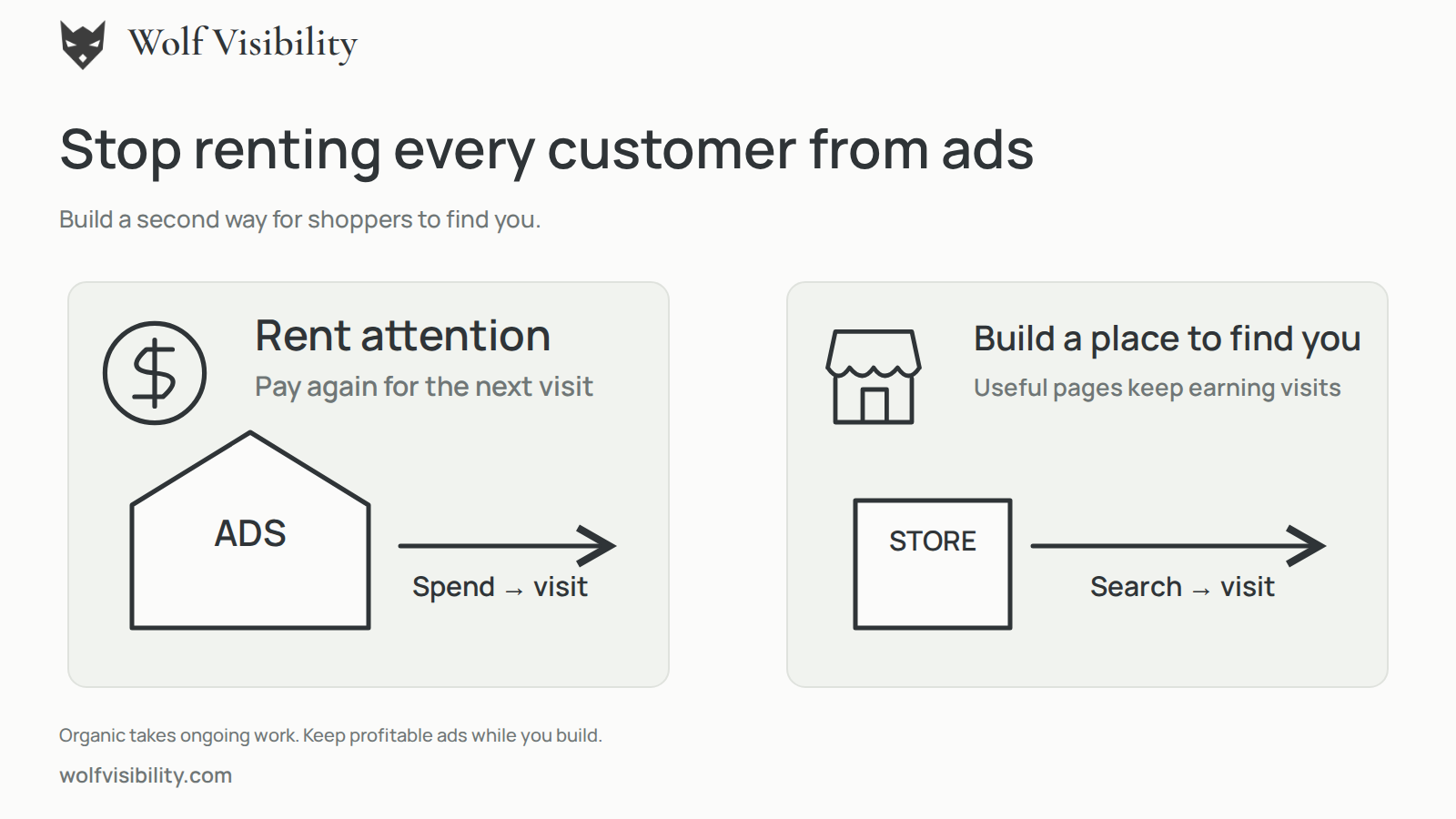
Where is the ad bill eating your margin?
Most founders look at return on ad spend, which compares revenue with ad cost. It hides everything else that comes out of an order. Look at what is left instead.
Here is the sum for one order from two campaigns. The figures are an illustration, so replace them with your own.
| Line | Campaign A | Campaign B |
|---|---|---|
| What you keep after discount and GST | ₹1,200 | ₹1,200 |
| Product and packaging | −₹420 | −₹420 |
| Forward shipping, gateway and COD fees | −₹140 | −₹140 |
| Allowance for RTO (refused COD orders) | −₹60 | −₹60 |
| Allowance for returns after delivery | −₹30 | −₹30 |
| Left before ads | ₹550 | ₹550 |
| Ad cost for this order | −₹300 | −₹600 |
| Left after ads | ₹250 | −₹50 |
Both campaigns bring the same order. Campaign A leaves ₹250. Campaign B costs you ₹50 every time it works.
What makes this sum different in India?
Four lines in that table behave differently here than in most other markets. Get them wrong and a campaign that looks profitable is not.
- Cash on delivery and RTO. A COD order that is refused at the door comes back as a return to origin. You have paid for the ad, the forward shipping and the return trip, and you have no revenue. Count delivered orders, never placed orders, and work out the RTO share for each campaign separately. Two campaigns with the same cost per order can have very different refusal rates.
- Prepaid versus COD. Prepaid orders are rarely refused. A small prepaid incentive can cost less than the RTO it prevents, but test it on your own orders before assuming so.
- Shipping by zone. Couriers charge by weight and zone, and remote pin codes cost more and take longer. Check whether an ad set is sending you orders from zones where shipping eats the margin.
- Price after discount and GST. The price a shopper sees includes GST and usually a coupon. Start the sum from what you keep, not from the listed price.
Which ads should you cut first, and which should you keep?
Sort your campaigns into three groups using the sum above.
- Leaves money on the first order. Keep these running. They fund everything else.
- Loses money on the first order, but those buyers come back. Keep them only if you can show the repeat orders in your own order data. A hoped-for second purchase is not evidence.
- Loses money, and you can’t show repeat orders. Pause these first.
Then look at who the ads reach. Ads shown to people who already know your brand often take credit for orders that would have happened anyway. Try pausing one of those for two weeks and watch total delivered orders, not the ad dashboard. If orders hold, you have found spend you can remove.
Cut in steps. Taking 10 to 20 percent out of the weakest group and watching for two weeks tells you more than switching everything off at once.
Which buyer question can your store answer without an ad?
An ad interrupts someone who was not looking for you. A search is the opposite: the shopper has already asked the question. If your store has the best answer, you can earn that visit without paying for the click.
The questions worth answering are the ones people ask just before buying. You already hear them:
- In WhatsApp and Instagram messages: “Will this suit oily skin?”, “Is COD available for my pin code?”
- In reviews and return reasons: “Smaller than I expected”, “Colour was different”.
- In your own search bar, and in Google’s suggestions when you type your category.
Pick one that comes up often and that your product answers well. “Which face wash for oily skin in humid weather” is a better first target than “best face wash”, because it is specific enough for a small brand to answer better than a large retailer.
It helps to know that stores do get this traffic. In our October 2026 study of shopping searches across 23 e-commerce verticals, stores held 62% of first-page Google results in India. Buying guides, forums, social posts and video took much of the rest. That is a snapshot of the searches we studied, not a rule for every query, so check the first page for your own question before you start.
Which page should you improve first?
Choose the page that should answer the question you picked. For most stores that is a collection page, sometimes a product page, and occasionally a short guide.
Then make it useful enough that a shopper could decide from it:
- Say plainly who the product is for and who it is not for.
- Answer the question in the first few lines, in the words buyers use.
- Show the details that cause returns: size, fit, shade, ingredients, what is in the box.
- Put delivery time by pin code, COD availability and the return policy where they can be seen.
- Add real customer reviews that mention the question.
One improved page is enough for a first test. Ten thin pages will teach you less. If you have not yet written down who your buyer is, the Founders’ Playbook has a worksheet for it.
How long before a page replaces paid clicks?
Longer than an ad, and nobody can promise a date. A new or improved page often takes weeks to be picked up and months to settle, and some never earn much. This is why you keep the profitable ads running in the meantime.
What you get in return is different in kind. An ad stops the day you stop paying. A page that answers a real question can keep bringing shoppers, and it also gives AI assistants and comparison articles something accurate to say about your brand.
What should you track each week?
Keep it to five numbers, written down on the same day each week:
- Delivered orders and what they left after all costs, including ads.
- Ad spend as a share of revenue from delivered orders.
- RTO share for each campaign.
- Visits to your chosen page that came from search, and orders from those visits.
- Orders from people who came back without an ad.
If the first number holds while the second falls, the plan is working. If delivered orders drop when you cut, put that spend back and try a different campaign.
Common questions
Should I stop ads completely?
No. Stop the ads that lose money on every delivered order and keep the ones that pay for themselves. Ads are a reasonable way to buy customers. The risk is having no other way.
How much should a D2C brand in India spend on ads?
There is no correct percentage. The ceiling is what a delivered order leaves before ads: ₹550 in the example above. Spend above that only where you can show repeat orders that make up the difference.
Should I turn off cash on delivery to cut wasted ad spend?
Not outright. Cash on delivery brings orders from buyers who will not prepay. Compare what COD orders leave after RTO for each campaign, then limit COD or offer a prepaid incentive only where refusals wipe out the margin.
Is SEO cheaper than ads?
It costs time and work up front and has no cost per click afterwards, but it is slower and less certain. Treat it as a second channel you are testing, not a replacement you are counting on.
Will this help my brand show up in ChatGPT or Gemini answers?
It can help, though nobody can guarantee it. AI assistants draw on what the web says about a product. A page that states clearly who your product suits gives them something accurate to use.
When this advice changes
- Ads are paying this month’s bills. If you have little cash in reserve, make smaller cuts and protect anything that leaves money. Build the page alongside.
- Nobody searches for your category yet. A truly new kind of product has no search demand to capture. You will need ads, creators or sampling to create the demand first.
- A festive season is close. Before Diwali or a big sale, shoppers are buying now. Run the test in a quieter month.
- Most of your orders come from marketplaces. If Amazon or Flipkart is your main channel, the margin sum is different, and your own store may not be the first thing to fix.
Note for your developer or agency: the page chosen for the test should be crawlable, have a self-referencing canonical, a unique title and meta description, and Product or CollectionPage structured data that matches the visible content.